
TermDriver at 300 baud
Keeping it low and slow with the TRS-80 Model 100

When you run a crowdfunding campaign, people ask questions. This is often surprising. I find that the things that I think are important are not necessarily what other people consider important. For TermDriver I really thought that unicode support would be requested given how many backers are from Europe. But actually the top questions were (1) why doesn’t it have a USB-C socket? (it’s coming, after the main version launches) and (2) can it run at 300 baud? I’d only tested it at the ridiculously slow speed of 1200 baud. Who needs 300 baud in 2025?
Turns out people with antique computers do. I have a couple of antiques around the place, including a TRS-80 Model 100. So I spent a few minutes making sure that TermDriver can talk to it at 300 baud.
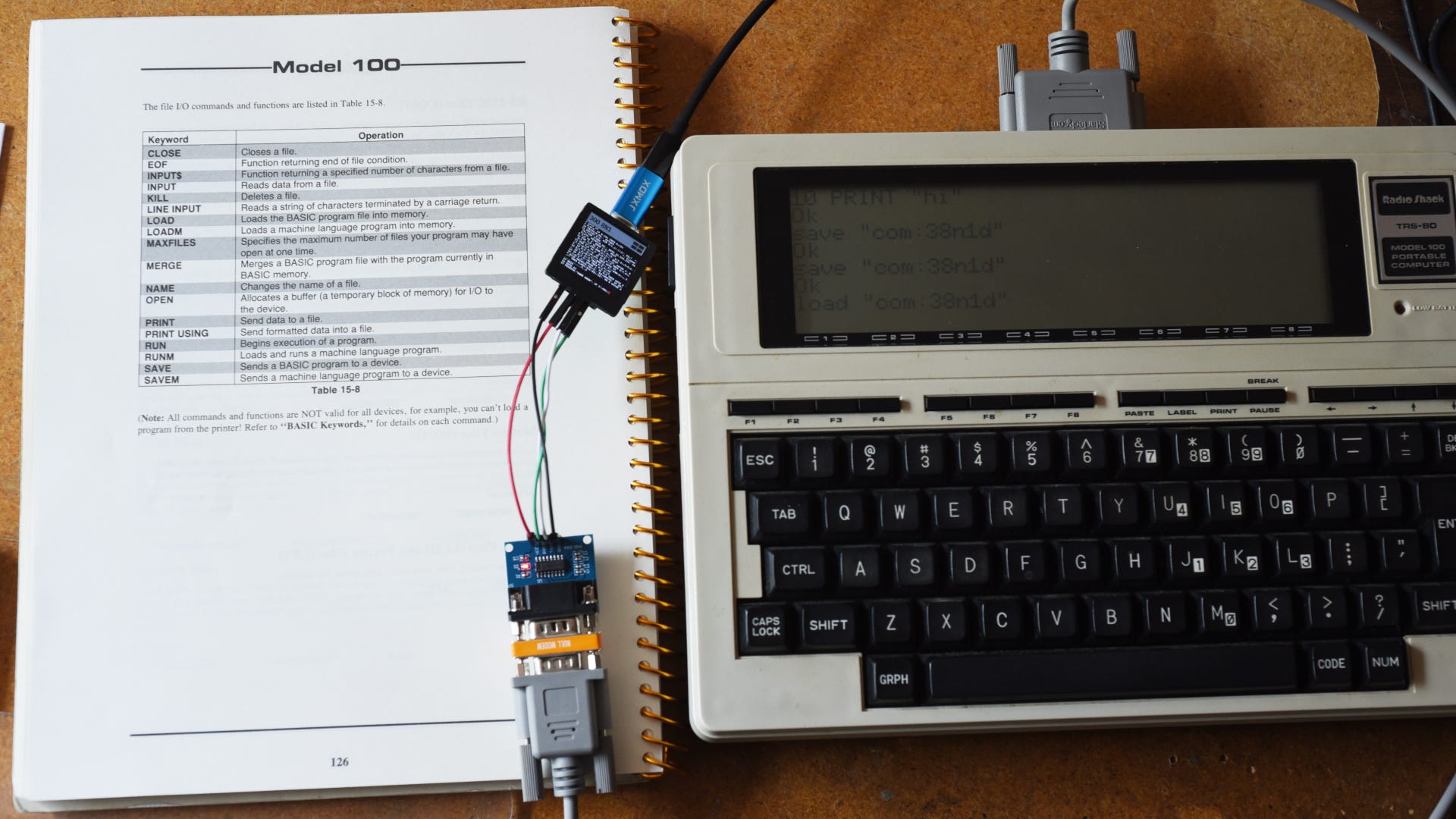
The Model 100 was introduced in 1983. Wikipedia calls it “one of the first notebook computers ever released.” Yes it is like a notebook. But using it is a reminder that things have improved a lot in 42 years.
But not everything has improved. The keyboard is pretty good by the standards of today’s laptops, with deep key travel and a positive action. And the accompanying spiral bound manual is surprisingly good.
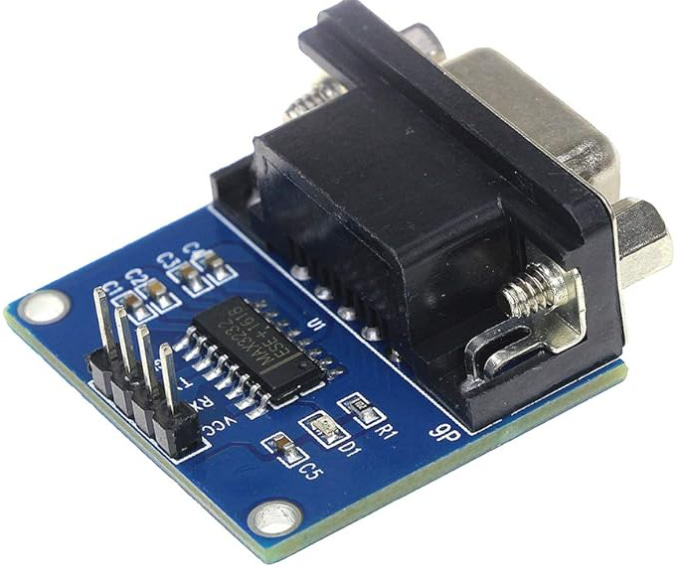
Hooking up the serial hardware was surprisingly simple. The TermDriver outputs 3.3 V serial levels, not old-school RS232 levels, so I’ve plugged it into this level shifter from Amazon. It’s just the minimum: given 3.3 V and TX and RX from the TermDriver, it outputs RS232 levels on the DB-9.
With all the hardware hooked up, and the TermDriver set up at 300 baud, I could use TRS-80 BASIC to save and load programs over the serial line. It was fun to see ancient BASIC code scrolling up the TermDriver’s screen. I must admit to a tiny pang of nostalgia.
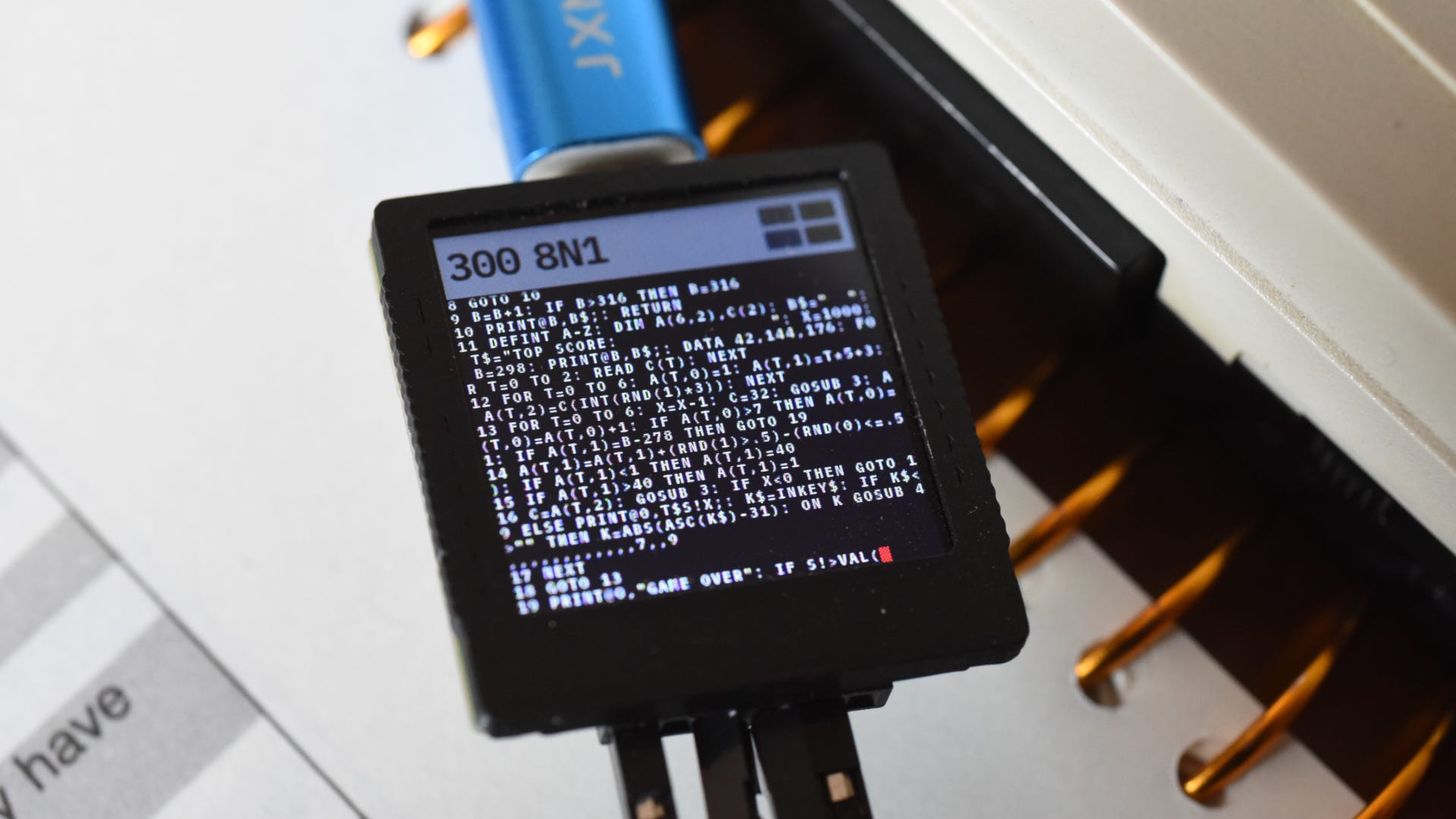
So for all the retro fans out there: yes TermDriver runs reliably at 300 baud. And it’s been confirmed on a machine from an age when 300 baud was considered pretty ok.
300 baud is a feature I would want. Though my retro hobby uses the TMS9902 UART everywhere, which typically operate from 110 to 9600 baud with 3 MHz bus speeds. I'm currently using only the 9600 baud level shifted down to 3.3V and traced on logic analyzer.